
Beyond the Desk
Beyond the Desk: Applying Vastu Principles to Common Areas and Conference Rooms
How we organise our workspaces significantly impacts our general efficiency and well-being in this fast-paced world when every second counts and productivity is essential. There’s more to the relationship between our mental and physical environments than practical designs and fashionable aesthetics. The traditional Indian system of building and design known as Vastu Shastra is one ancient practice that explores this complex link. Although typically linked with residential areas, the concepts of Vastu can be effectively incorporated into business settings, especially shared spaces and meeting rooms, to promote success, harmony, and creativity.
Understanding Vastu Principles:
The fundamental tenet of Vastu Shastra is that a space’s layout and orientation significantly impact the flow of energy within it, which in turn affects the lives and pursuits of those who occupy it. According to Vastu principles, the five elements—earth, water, fire, air, and space—and their associated directions should be harmoniously balanced. Vastu seeks to create environments that promote prosperity, health, and spiritual well-being by aligning architectural elements with these elements and directions.
Applying Vastu in Common Areas:
The centre of any workspace is the common area, where staff members congregate for informal meetings, breaks, and group projects. By arranging these areas by Vastu principles, one can improve morale, creativity, and communication:
Layout & entry: Ideally, a typical area’s entry faces east or northeast, signifying the coming of opportunity and pleasant energy. Prana, the life force of the area, flows freely when the arrangement is roomy and devoid of clutter, creating an air of openness and energy.
Natural aspects: Adding natural elements to a place, like indoor plants, bubbling water features, or natural light sources, not only improves its visual appeal but also gives it a revitalising vibe. Water elements represent wealth and richness, while plants symbolise development and vigour.
Seating Configurations: Orienting chairs to face west or southwest promotes steadiness and groundedness, facilitating deep conversations and exchanging ideas. Squeezing chairs into tight spaces or under exposed beams can lead to uncomfortable and unbalanced energy patterns.
Colours and Décor: To create the appropriate atmosphere and mood, colour choices and décor should align with Vastu principles. While avoiding stark contrasts or overpowering patterns preserves visual equilibrium, soft, calming colours like light blue, green, or cream encourage peace and harmony.
Handling Clutter: Clutter represents sluggish energy as much as a physical impediment. To guarantee a free flow of energy and preserve an atmosphere favourable for creativity and collaboration, encourage routine clearing and organising of common areas.
Enhancing Conference Rooms with Vastu:
Conference rooms are the hub of corporate activity, where critical choices are taken, plans are formulated, and partnerships are established. Organisations may maximise productivity, decision-making, and overall success by implementing Vastu principles into the design and layout of these spaces:
Location and Orientation: The northwest or northeastern portion of the structure is ideal for conference rooms because it promotes strategic thinking and effective communication. The entry should face either north or east to bring good feelings and favourable energy into the space.
Shape and Size: According to Vastu, conference rooms that are square or rectangular are lucky because they encourage balance and stability. Steer clear of confined areas and asymmetrical forms as they may obstruct energy flow and complicate decision-making.
Seating Arrangements: The conference table and seats should be arranged according to Vastu principles to empower leaders and participants. To improve authority and coherence of ideas, place the head of the table facing either north or east in the southwest direction. Ensure there is enough room between chairs so people can move around freely and share ideas.
Technology and Equipment: The conference room’s northeast corner is linked to concentration and mental clarity; therefore, electronic devices and technical equipment should be kept away. Modern technology and ergonomic furniture can help you create a space ideal for brainstorming and fruitful meetings.
Lighting and Ventilation: Keeping conference rooms enthusiastic and upbeat requires sufficient natural light and ventilation. Increase natural lighting by adding skylights or windows and augment with artificial daylight-like lighting. Ensure there is enough airflow to avoid stagnation and encourage mental clarity.
The Bottom Line
Encouraging common areas and conference rooms according to Vastu principles can significantly improve the well-being and productivity of those who use them. Organisations may design environments that stimulate innovation, encourage teamwork, and promote success by balancing the built environment with the softer energies of the natural world. Whether by placing furniture with intention, using colour and décor strategically, or paying attention to natural elements, applying Vastu Shastra principles to workspace design offers a holistic approach beyond simple functionality and elevating the human experience in corporate settings. Accepting these age-old wisdom traditions in contemporary settings opens the door to a harmonic blend of tradition and innovation, where productivity thrives against a backdrop of harmony and peace.
Join Our Community
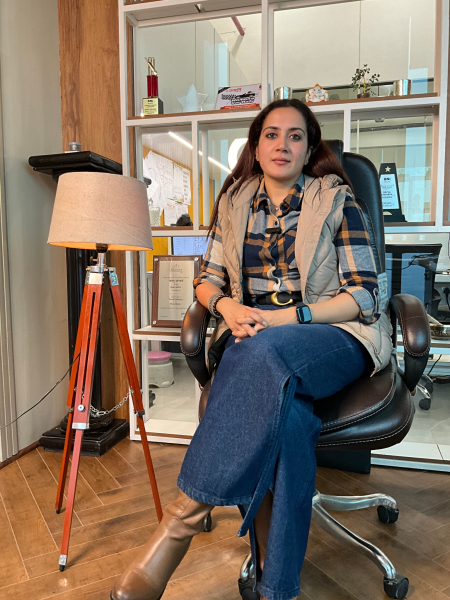
Know the inspiring journey of Divvya Chhabraa, a renowned scientific vastu expert and space strategist. With over eight years of experience and a portfolio spanning India, the US, the UK, Singapore, and Canada, Divvya combines Vastu, astrology, numerology, and business acumen to transform spaces. Discover how she’s redefined Vastu with a modern, scientific approach, helping clients achieve harmony and prosperity in their homes and workspaces.
